BioRePeel vs Chemical Peel: Which Suits You? | Reading UK
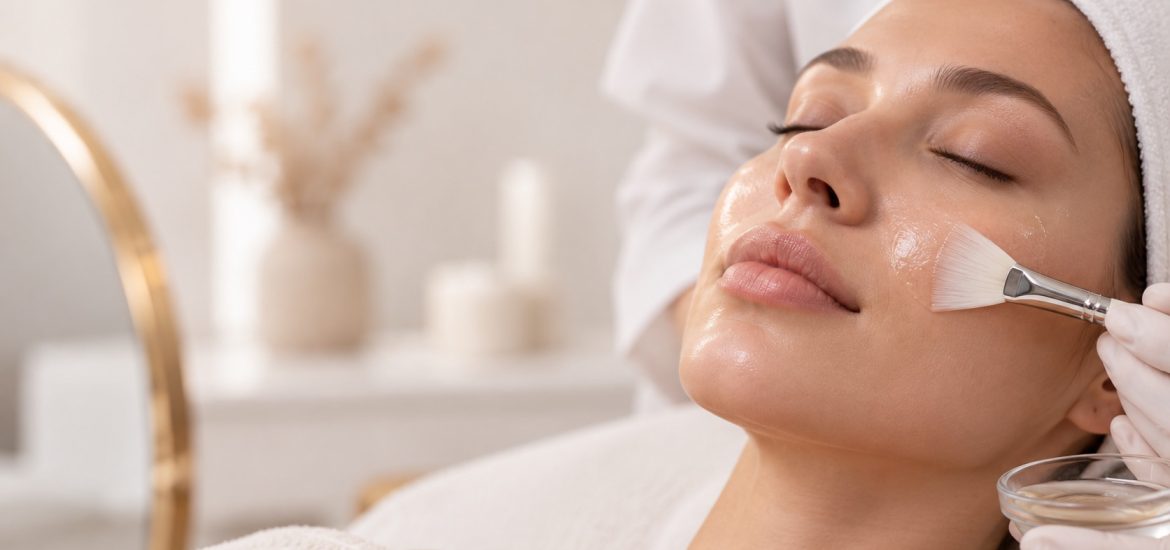
BioRePeel and a chemical peel are not two completely separate treatment categories.
BioRePeel is itself a professional chemical peel formulation. “Chemical peel” is the broader term for treatments that use chemical exfoliating agents to create controlled exfoliation and support skin renewal.
So when choosing between BioRePeel and the standard Chemical Peel offered at Glowing Touch Reading, the more useful question is:
Which peel is more appropriate for your skin concern, current skin condition, sensitivity and expected downtime?
At Glowing Touch Beauty in Reading, both BioRePeel and Chemical Peel are available following skin assessment at:
343A Wokingham Road, Earley, Reading, RG6 7EB.
BioRePeel vs Chemical Peel: What’s the Difference?
BioRePeel is a specific branded professional peel with its own formulation and treatment protocol.
“Chemical peel” is a wider treatment category covering many different products, ingredients, concentrations and treatment depths.
At Glowing Touch, these are listed as separate treatments.
Factor | BioRePeel | Glowing Touch Chemical Peel |
Treatment type | Specific branded chemical peel | Professional chemical peel service |
Protocol | BioRePeel-specific | Depends on the peel used |
Common Glowing Touch positioning | Congestion, dullness, uneven texture and blemish-prone skin | Selected according to skin concern and suitability |
Visible peeling required? | No | Not necessarily |
Downtime | Usually limited, although temporary reactions can occur | Depends on the formulation and treatment intensity |
Price at time of publication | £65 | £60 |
Best chosen according to | Skin condition and treatment goal | Skin condition, formulation and treatment goal |
The exact formulation used for Glowing Touch’s standard Chemical Peel should be confirmed during consultation.
That matters because the words “chemical peel” alone do not tell you which acids, strength or protocol will be used.
What Is BioRePeel?
BioRePeel is a professional topical peel used at Glowing Touch Reading for suitable clients concerned about areas such as:
- congestion;
- oily-looking skin;
- dullness;
- uneven texture;
- superficial post-blemish marks;
- and blemish-prone skin.
It uses a defined professional formulation rather than being a generic term for any acid-based peel.
You can read more about the treatment on the dedicated BioRePeel Reading page.
BioRePeel is often chosen by clients looking for active professional exfoliation while still wanting relatively limited downtime.
However, “minimal downtime” does not mean the treatment is suitable for every skin type or condition.
What Does “Chemical Peel” Mean?
A chemical peel is a controlled skin-resurfacing treatment in which a chemical solution is applied to the skin to exfoliate at a selected depth.
The effect depends on factors including:
- the active ingredient;
- concentration;
- pH;
- contact time;
- number of layers;
- treatment protocol;
- current skin condition;
- and previous skin preparation.
Chemical peels can range from very superficial treatments with limited recovery to substantially deeper procedures requiring more downtime and clinical oversight.
That does not mean Glowing Touch offers every depth of peel.
It simply explains why comparing BioRePeel with “chemical peels” as one uniform treatment is misleading.
Is BioRePeel a Chemical Peel?
Yes.
BioRePeel belongs within the broader chemical-peel category.
A useful way to understand the relationship is:
Chemical peel → the treatment category
BioRePeel → one specific professional peel formulation and protocol within that category
That distinction matters because clients sometimes search for:
“BioRePeel or chemical peel?”
when the real choice is between BioRePeel and another specific peel formulation.
Why Might Glowing Touch Recommend BioRePeel?
BioRePeel may be discussed when concerns include:
- congestion;
- oiliness;
- dull-looking skin;
- rough or uneven texture;
- blemish-prone skin;
- or superficial post-blemish marks.
But the treatment should not be chosen simply because one of those words describes your skin.
For example, congestion may exist alongside:
- sensitivity;
- active inflammation;
- damaged skin barrier;
- prescription acne treatment;
- significant pigmentation;
- or another skin condition.
Those factors can alter whether a peel is appropriate.
Why Might Another Chemical Peel Be Recommended Instead?
Another professional peel may be more appropriate if a different formulation better matches the skin concern or treatment plan.
The choice can depend on:
- skin type;
- sensitivity;
- pigmentation tendency;
- texture;
- previous peel experience;
- current skincare;
- and the desired treatment intensity.
This is where the specific formulation matters.
A client should be able to ask:
Which peel are you recommending, what does it contain, and why is it more appropriate for my skin than BioRePeel?
That is a better question than simply choosing the treatment with the most recognisable name.
BioRePeel vs Chemical Peel for Congestion and Oiliness
BioRePeel is specifically positioned at Glowing Touch around concerns including congestion, oiliness and blemish-prone skin.
However, not every client with oily skin needs the same peel.
A practitioner still needs to establish:
- whether active inflammation is present;
- whether the skin barrier is compromised;
- whether acne medication is being used;
- whether pigmentation develops easily after irritation;
- and whether a cosmetic peel is appropriate at all.
If acne is your primary concern, our dedicated guide to BioRePeel for acne-prone skin in Reading covers that topic in more detail.
That article should remain the main page for the acne-specific search intent.
BioRePeel vs Chemical Peel for Dull or Uneven Skin
Both BioRePeel and other professional peels may be considered where the goal is to improve the appearance of dull or uneven-looking skin.
But “uneven” can mean several things:
- rough texture;
- congestion;
- post-blemish pigmentation;
- sun-related pigmentation;
- redness;
- dehydration;
- or uneven colour.
These concerns do not all respond to the same treatment.
A peel should therefore be selected according to what is creating the uneven appearance, not simply because exfoliation sounds appropriate.
What About Post-Blemish Marks?
“Acne marks” or “post-blemish marks” can refer to several different things.
Post-inflammatory hyperpigmentation
Darker pigment left after inflammation.
Post-inflammatory erythema
Persistent red or pink marks.
Structural acne scarring
Changes in the physical surface or depth of the skin.
These are different concerns.
A superficial peel may be discussed for some pigment or texture concerns, but it should not be presented as capable of removing deep structural acne scars.
The skin needs to be assessed before treatment selection.
Does BioRePeel Cause Visible Peeling?
Not necessarily.
After BioRePeel, some clients may experience:
- dryness;
- light flaking;
- temporary tightness;
- mild sensitivity;
- or temporary redness.
Others may have little visible peeling.
Visible peeling is not evidence that a peel has worked better.
A stronger visible reaction is not automatically a better clinical or cosmetic result.
The goal is controlled treatment appropriate for the skin, not maximum visible shedding.
Does Every Chemical Peel Make Your Skin Peel?
No.
Visible peeling depends on:
- formulation;
- treatment depth;
- acid concentration;
- contact time;
- skin condition;
- and individual response.
A superficial peel may produce minimal visible flaking.
Deeper peels can involve substantially greater skin shedding and recovery.
So when someone asks:
“How much will I peel?”
the answer should relate to the specific treatment being recommended, not chemical peels in general.
Which Has Less Downtime?
There is no accurate universal comparison between BioRePeel and all other chemical peels because other peels vary substantially.
At Glowing Touch, BioRePeel is positioned as a treatment with relatively limited downtime for many suitable clients.
Temporary effects can still include:
- redness;
- tightness;
- dryness;
- sensitivity;
- and light flaking.
Another superficial chemical peel may have similarly limited downtime.
A stronger or deeper peel can require considerably more recovery.
The useful question during consultation is:
How much downtime should I expect from the exact peel you’re recommending for me?
What Does Glowing Touch Assess Before Recommending a Peel?
At the Reading clinic, peel selection should begin with the condition of the skin today rather than the treatment name.
Your Main Concern
The practitioner needs to establish whether the priority is:
- congestion;
- oiliness;
- dullness;
- uneven texture;
- post-blemish marks;
- pigmentation;
- or routine skin maintenance.
Current Skin Condition
Treatment may need to be delayed or adjusted if the skin is:
- irritated;
- inflamed;
- sunburnt;
- broken;
- unusually sensitive;
- or reacting to current products.
Current Skincare
Tell your practitioner if you use:
- retinoids;
- exfoliating acids;
- benzoyl peroxide;
- prescription acne treatments;
- prescription creams;
- or other strong active products.
These can affect peel tolerance and treatment planning.
Previous Skin Treatments
Relevant history can include:
- BioRePeel;
- previous chemical peels;
- laser treatments;
- microneedling;
- facials;
- prescription acne treatment;
- and recent aesthetic procedures.
Pigmentation History
People prone to post-inflammatory pigmentation may require particularly careful treatment selection because irritation itself can contribute to pigment changes.
Upcoming Sun Exposure
A professional peel immediately before significant sun exposure or a sunny holiday may not be ideal.
Tell your practitioner about upcoming travel or major events before treatment.
When Might Neither BioRePeel Nor Another Peel Be Appropriate?
Sometimes the correct recommendation is not to perform a peel at that time.
Treatment may need to be postponed or avoided where there is:
- active or significant skin inflammation;
- broken skin;
- sunburn;
- uncontrolled eczema or dermatitis;
- active infection;
- severe irritation;
- certain medication or topical-treatment considerations;
- or another skin condition requiring medical assessment.
This is an important part of professional treatment planning.
A consultation should be capable of ending with:
“Your skin is not suitable for a peel today.”
The goal is not to perform a treatment simply because an appointment has been booked.
How Do Chemical-Peel Risks Change With Treatment Depth?
Risk depends significantly on the depth and intensity of the peel.
Superficial peels are more commonly associated with temporary effects such as:
- redness;
- dryness;
- scaling or flaking;
- sensitivity;
- irritation;
- and temporary pigment changes.
As peel depth increases, so does the potential for more substantial complications and recovery.
These can include:
- prolonged redness;
- infection;
- persistent pigment changes;
- and scarring.
This does not mean Glowing Touch offers medium or deep chemical peels.
It explains why safety information about “chemical peels” cannot be applied equally to every treatment carrying that name.
UK government information on non-surgical cosmetic procedures similarly distinguishes superficial, medium and deeper chemical peels according to treatment depth and risk. You can read the GOV.UK information on cosmetic procedure licensing and peel depth.
Is BioRePeel Risk-Free Because Downtime Is Limited?
No.
Limited downtime does not mean no risk.
BioRePeel is still a professional peel.
Temporary effects may include:
- redness;
- dryness;
- sensitivity;
- tightness;
- tingling;
- and light flaking.
Suitability may also be influenced by:
- active skincare;
- skin sensitivity;
- medication;
- recent procedures;
- and the condition of the skin on the day.
Always follow the aftercare provided for your specific treatment.
What Should You Avoid After a Peel?
Aftercare depends on the treatment performed.
In general, recently treated skin should not be subjected immediately to unnecessary irritation.
Your practitioner may advise temporarily avoiding:
- aggressive exfoliation;
- strong active skincare;
- picking or scrubbing;
- excessive heat;
- saunas and steam rooms;
- and excessive direct sun exposure.
Use the exact instructions provided after your treatment rather than applying generic online advice to every peel.
Why Is Sun Protection Important?
Professional exfoliating treatments can temporarily increase skin sensitivity.
Excessive UV exposure during recovery can contribute to:
- irritation;
- redness;
- and unwanted pigment changes.
This is particularly important for people who are already prone to post-inflammatory hyperpigmentation.
Sun protection is therefore part of responsible treatment planning rather than simply optional skincare advice.
BioRePeel vs Basic Facial: What’s the Difference?
BioRePeel and a basic facial are different treatment categories.
A basic facial may be discussed where the goal is:
- cleansing;
- hydration;
- general maintenance;
- relaxation;
- or a gentler introduction to professional skin treatments.
BioRePeel provides more active professional exfoliation and may be discussed where concerns include congestion, dullness or uneven texture.
More active does not automatically mean more appropriate.
Some skin may benefit more from a gentler approach.
How Long Does BioRePeel Take?
Glowing Touch currently advises that a BioRePeel appointment generally takes approximately 30–45 minutes, including skin preparation and aftercare guidance.
An appointment may include:
- consultation;
- skin assessment;
- cleansing and preparation;
- peel application;
- treatment according to protocol;
- post-treatment products;
- aftercare advice.
When Will You See Results?
Glowing Touch currently describes changes following BioRePeel as developing gradually over approximately 3–7 days, although individual response varies.
The intended result is generally a fresher, smoother and more refined-looking complexion rather than a dramatic overnight transformation.
If repeated treatments are recommended, the course and interval should be explained specifically for your skin.
How Many Peel Treatments Do You Need?
There is no universal course.
Frequency may depend on:
- the skin concern;
- treatment selected;
- skin sensitivity;
- response to the first peel;
- current skincare;
- previous treatments;
- and practitioner protocol.
One client may be suitable for a single treatment.
Another may be advised to complete a course.
A third may be better suited to a different type of skin treatment entirely.
BioRePeel vs Glowing Touch Chemical Peel: What Does Each Cost?
At the time of publication, Glowing Touch lists:
Chemical Peel — £60
BioRePeel — £65
See the current Glowing Touch treatment prices before booking because prices may change.
The small price difference should not determine treatment selection.
The more useful questions are:
- Which exact peel is being recommended?
- What formulation will be used?
- Why does it suit my skin?
- What downtime should I expect?
- What result is realistic?
Once the exact formulation used for Glowing Touch’s standard Chemical Peel is confirmed, this comparison can be made even more specific.
Questions to Ask Before Booking a Peel
Useful questions include:
- What do you think my main skin concern is?
- Which exact peel are you recommending?
- What ingredients or acids does it use?
- Why is this peel preferable to BioRePeel for my skin?
- How superficial or intensive is the treatment?
- Is visible peeling likely?
- How much downtime should I expect?
- Should I change any skincare beforehand?
- What should I avoid afterwards?
- Does my medication affect suitability?
- What are the risks for my skin type?
- Do I need one treatment or a course?
- What alternative would you suggest if I am not suitable for a peel?
A good consultation should explain why a particular peel is being selected, rather than simply presenting several treatment names.
BioRePeel and Chemical Peels at Glowing Touch Reading
Glowing Touch Beauty provides professional skin treatments from:
343A Wokingham Road Earley Reading RG6 7EB
Reading skin treatments include:
- BioRePeel;
- Chemical Peel;
- Basic Facial;
- Oxygen Facial Therapy;
- Profhilo;
- Jalupro;
- Lumi-Pro;
- Ejal40;
- and wider skin-quality treatments.
Explore BioRePeel treatment in Reading, read our specialist guide to BioRePeel for acne-prone skin or check the current Glowing Touch price list.
Frequently Asked Questions
Got any questions? Here are the most common things clients ask before booking their first treatment.
Yes. BioRePeel is a specific professional chemical peel formulation. “Chemical peel” is the broader category containing many different formulations and treatment depths.
Not universally. The answer depends on which chemical peel is being compared, the formulation, your skin condition and the concern being treated.
They are separate salon services with different treatment protocols. BioRePeel is a specific branded peel, while the standard Chemical Peel service should be selected according to skin assessment and the formulation being used.
Not necessarily. Some clients experience light flaking or dryness, while others have little visible peeling.
No. Downtime depends on the peel formulation and depth. Superficial treatments may involve limited recovery, whereas stronger peels can require substantially more.
It may be discussed for selected clients with congestion, oiliness, uneven texture and superficial post-blemish concerns. It is not a replacement for medical treatment of moderate, severe, painful or scarring acne.
There is no universal answer. Pigmentation type, skin tone, sensitivity and peel formulation all matter, and inappropriate irritation can sometimes worsen pigment changes.
Possibly, but sensitivity needs to be assessed carefully. In some cases a gentler facial or no peel at that time may be more appropriate.
At the time of publication, Glowing Touch lists BioRePeel at £65.
At the time of publication, Glowing Touch lists Chemical Peel at £60. Check the current pricing page before booking.
Glowing Touch Beauty offers professional peel and facial treatments at 343A Wokingham Road, Earley, Reading, RG6 7EB. Explore BioRePeel in Reading or contact Glowing Touch to arrange a consultation.
Telephone – Aesthetics Clinic
Telephone – Hair Salon
Not Sure Which Peel Your Skin Needs?
You do not need to choose a peel because one product name sounds more advanced.
Start with the actual skin concern:
Congestion? Oiliness? Dullness? Uneven texture? Post-blemish marks? Pigmentation? Sensitivity?
At Glowing Touch Beauty in Earley, Reading, Rebeca can assess your skin condition, current skincare, treatment history and goals before discussing whether BioRePeel, the salon’s standard Chemical Peel, a gentler facial—or no peel at that time—is the more appropriate option.
The goal is not to choose the strongest peel.
It is to choose the right treatment for the skin you actually have today.
Explore BioRePeel treatment in Reading, view current Glowing Touch prices or contact Glowing Touch Reading to arrange your skin consultation.