Balayage vs Highlights: Which Is Right for You? | Wembley
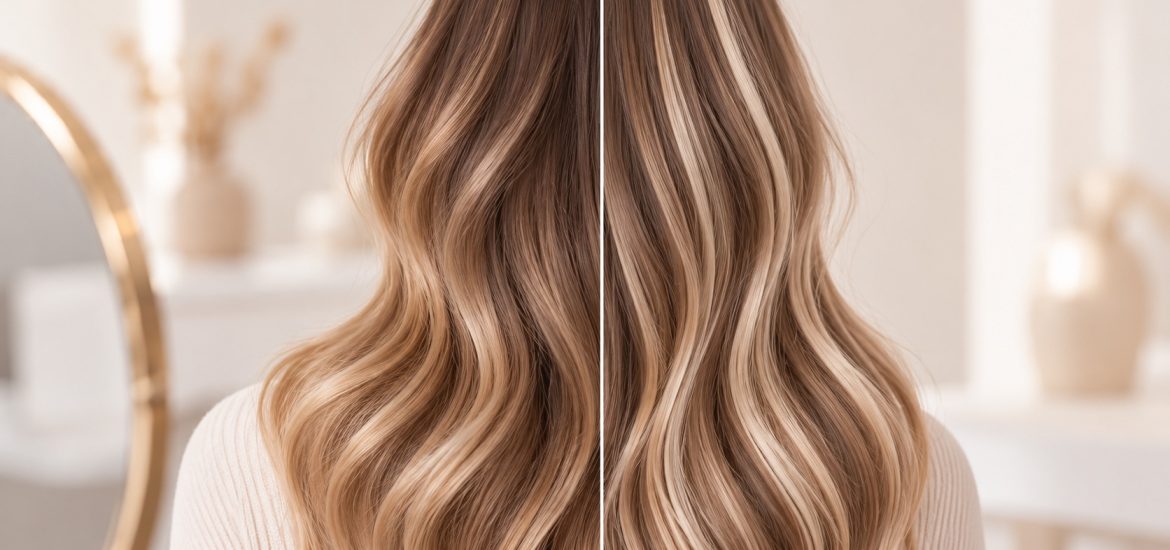
Balayage and highlights can both add brightness and dimension to the hair, but they create that lightness in different ways.
Balayage usually creates a softer, more graduated transition between your natural colour and lighter sections, while traditional highlights generally create more structured brightness throughout the hair. The better choice depends on your starting colour, previous colour history, how blonde you want to be, how you want the roots to grow out and how often you want to maintain your colour.
At Glowing Touch Hair Salon in Wembley, we offer balayage, full-head highlights, half-head highlights, toners, full-head colour, root colour and specialist colour services from our salon at 424 High Road, Wembley, HA9 6AH.
Balayage vs Highlights: What Is the Main Difference?
The biggest difference is not simply how blonde the hair becomes. It is how the lighter pieces are placed and how the colour blends into the natural hair.
Balayage uses customised placement to create lighter sections that usually blend gradually into the base colour. Traditional highlights generally use more structured sections, often with foils, and can bring brightness closer to the root.
Factor | Balayage | Traditional Highlights |
Placement | Customised and graduated | More structured sections |
Root appearance | Usually softer and more diffused | Can begin much closer to the scalp |
Overall effect | Dimensional and blended | More consistent brightness |
Grow-out | Often softer | Root growth can become more visible |
Brightness | Can range from subtle to very bright | Can create strong overall lightness |
Maintenance | Often more flexible | Depends on root placement and contrast |
Common goal | Dimension with a softer root | Greater or more uniform brightness |
Neither technique is automatically better.
The right question is:
What do you want your colour to look like immediately after the appointment, and how do you want it to look as your natural hair grows?
What Is Balayage?
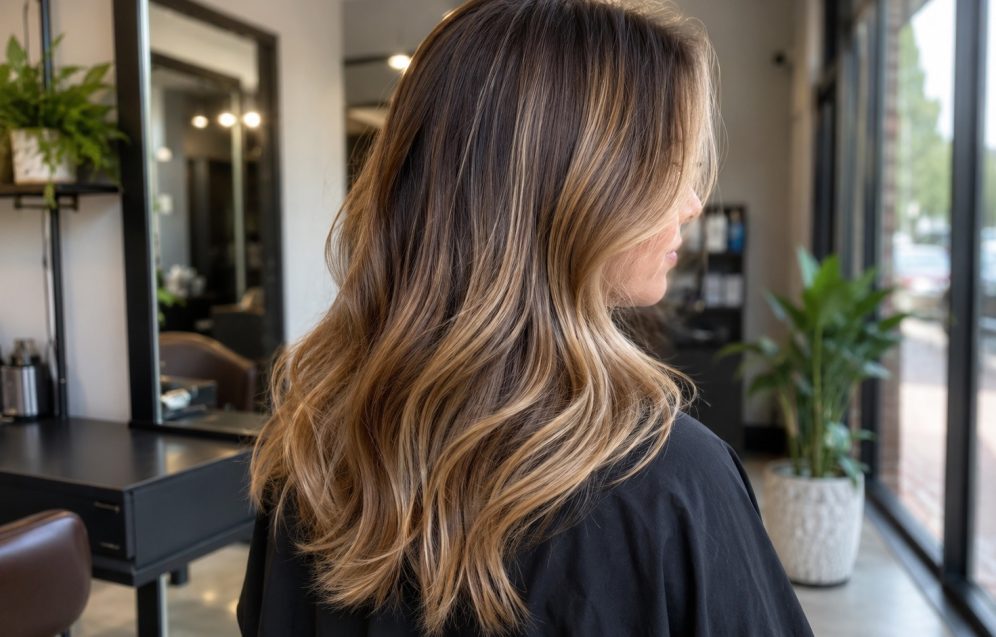
Balayage is a hair-colouring technique that uses selective placement of lighter pieces to create dimension rather than colouring every section in the same way.
A balayage result might include:
- soft caramel pieces through brunette hair;
- a brighter face frame;
- lighter ends with a deeper natural root;
- beige or creamy blonde dimension;
- or a much brighter blonde effect while still retaining some depth.
This is why saying “I want balayage” does not describe one fixed hairstyle.
Two clients can both book balayage and leave with completely different-looking results.
The finished colour depends on:
- your natural base;
- previous colour;
- how light the hair can safely lift;
- where brightness is placed;
- how much natural depth is retained;
- and the toner used afterwards.
What Are Traditional Highlights?
Highlights involve lightening selected strands throughout the hair.
They are commonly separated using foils, allowing the colourist to control where the lightened sections begin and how much brightness is distributed throughout the head.
Highlights can be:
- very fine and subtle;
- bright and high-contrast;
- concentrated around the face;
- applied through half of the head;
- or distributed throughout a full head.
Traditional highlights therefore do not automatically mean thick blonde stripes.
Placement, section size, spacing, your starting colour and the final toner all influence how natural or noticeable the result appears.
What Does Our Wembley Hair Team Consider Before Recommending Balayage or Highlights?
The technique should follow the desired result rather than the other way around.
During a colour consultation, several factors need to be considered before deciding whether balayage, highlights or another colour approach makes more sense.
Your Starting Colour
Naturally light brown hair, dark brunette hair and previously coloured black hair will not respond to lightening in the same way.
The starting point affects both what can be achieved and how many appointments may be required.
Previous Hair Colour
Your colourist needs to know about previous:
- permanent colour;
- box dye;
- bleach;
- highlights;
- balayage;
- toners;
- henna;
- or colour-correction treatments.
Hair can look like one colour on the surface while containing several layers of artificial pigment underneath.
How Blonde You Want to Be
“Blonde” can mean very different things.
You may want:
- a few brighter pieces;
- caramel dimension;
- a blonde face frame;
- significantly more blonde throughout;
- or very little of your natural base visible.
These goals may require different placement.
Your Preferred Root
Some clients deliberately want to retain a deeper root.
Others want brightness beginning much closer to the scalp.
This distinction is one of the most useful indicators when choosing between a softer balayage result and more structured highlights.
Hair Condition
Previous bleaching, chemical treatments, porosity and breakage can limit how aggressively the hair should be lightened.
The healthiest colour plan is not always the one that creates the biggest transformation in a single appointment.
Maintenance
How frequently you want to return to the salon matters.
If you prefer longer periods between major colour appointments, your colourist may plan the placement differently from someone comfortable maintaining brighter roots more frequently.
Which Should You Choose? Four Common Colour Goals
Rather than choosing balayage because it is trending or highlights because you have had them before, it is more useful to start with your desired result.
“I Want Lighter Hair but I Don’t Want Obvious Roots”
A softer balayage-style placement may be worth discussing.
Keeping some natural depth near the root can create a more gradual transition as the hair grows.
This does not make balayage maintenance-free, but it can reduce the appearance of a defined regrowth line.
“I Want to Look Much Blonder Overall”
Highlights may be more suitable if the goal is to introduce brightness throughout a larger proportion of the hair, including closer to the root.
A full head of highlights can create much more widespread blonde coverage than a very soft balayage.
“I’m Brunette and Want Caramel or Honey Dimension”
Balayage can work particularly well when the goal is to retain brunette depth while introducing lighter ribbons through the mid-lengths and ends.
However, the correct technique still depends on whether the hair is natural or previously coloured.
“I Have Dark Box Dye but Want to Go Blonde”
This is no longer simply a balayage-versus-highlights decision.
Previous artificial pigment can affect how evenly and safely the hair lifts.
Your colourist may need to assess the condition of the hair, discuss realistic expectations and potentially plan the change over more than one appointment.
Which Creates a Softer, More Blended Result?
Balayage is usually associated with a softer transition between lighter hair and the natural base.
The lighter sections can be positioned so they gradually blend into the root rather than all beginning at approximately the same level.
That can create a more diffused grow-out.
However, highlights can also look extremely soft.
Very fine sections, careful spacing, strategic placement and an appropriate toner can create subtle brightness without producing an obvious striped effect.
The technique alone does not determine whether a colour looks natural.
Contrast, placement and tone matter just as much.
Which Is Better If You Want to Go Blonder?
If your objective is substantial blonde coverage throughout the hair, highlights can give the colourist more control over distributing lightness across the full head.
Balayage can also create a very bright blonde result, but it often intentionally retains more depth in selected areas.
This is why it is better to explain exactly what “blonder” means to you.
For example:
- Do you want very little natural brunette visible?
- Do you mainly want brighter ends?
- Do you want blonde around the face?
- Do you want the roots noticeably lighter?
- Or do you want dimensional blonde with areas of deeper colour?
The answer can change the recommended technique.
Balayage vs Highlights for Brown Hair
Both techniques can work beautifully on brunette hair, but they can produce different effects.
Balayage can retain more of the brunette base while introducing lighter pieces through selected areas.
Depending on the starting colour, this could create:
- caramel brunette;
- honey tones;
- beige brunette;
- lighter face-framing pieces;
- or a more noticeable brunette-to-blonde transition.
Highlights may be preferable when someone with brown hair wants more consistent lightness throughout the head or wants brightness closer to the roots.
The key distinction is often dimension versus coverage.
Balayage vs Highlights for Blonde Hair
Someone who is already blonde may still benefit from either technique.
Balayage can help create:
- dimensional blonde;
- deeper areas around the root;
- brighter lengths;
- or a more blended grow-out.
Highlights may be useful when the aim is to increase brightness throughout the head or refresh blonde closer to the root.
Existing blonde also needs to be assessed carefully because previously lightened areas do not necessarily need to be lightened again.
Avoiding unnecessary overlap with already processed hair can form part of responsible colour planning.
Which Grows Out More Softly?
Balayage generally produces a softer grow-out when the colour is deliberately blended away from the natural root.
Traditional highlights taken close to the scalp can create a more visible difference between the highlighted hair and new growth.
However, maintenance still depends on:
- how bright the hair is;
- the contrast against the natural base;
- whether the colour needs toning;
- how quickly the hair grows;
- and how polished you want the colour to remain.
If maintenance is a major concern, read our guide to how long balayage lasts and when it may need refreshing.
Is Balayage More Low-Maintenance Than Highlights?
Often, but not automatically.
A soft balayage that retains plenty of natural colour at the root can usually grow out more discreetly than bright highlights starting very close to the scalp.
However, a high-contrast blonde balayage may still need:
- toner appointments;
- face-frame refreshes;
- conditioning treatments;
- and periodic lightening appointments.
Similarly, someone with highlights may not require a full head every time.
Maintenance should therefore be planned around the finished colour, not simply the service name.
What Is a Toner and Why Might You Need One?
Lightening the hair and creating the final shade are not always the same stage of a colour appointment.
When darker hair is lightened, underlying warmth may become visible.
A toner can be used afterwards to refine the final shade.
Depending on the desired result, this could create:
- beige blonde;
- cooler blonde;
- creamy blonde;
- warmer honey;
- caramel;
- or another customised tone.
An easy way to understand the difference is:
Placement determines where the brightness appears. Toner helps determine what colour that brightness becomes.
You can check our current Wembley hair colour and toner prices before booking.
Can You Combine Balayage and Highlights?
Yes.
Modern colour appointments do not always fit perfectly into one technique category.
A client may want:
- softer blended colour through the lengths;
- brighter pieces around the face;
- and additional brightness closer to the root.
A colourist can use different placement methods to work towards the desired result.
This is another reason inspiration photographs are useful.
Rather than deciding that you definitely need one named technique, show your stylist the colour result you want.
What If You Have Previously Coloured or Box-Dyed Hair?
Always tell your colourist about previous colour.
This includes colour applied months earlier if it is still present through the lengths.
Previous artificial pigment can affect:
- how quickly the hair lightens;
- what underlying tones appear;
- how evenly the hair lifts;
- whether the desired result can be achieved in one appointment;
- and how much lightening the hair can tolerate.
If the hair contains several layers of previous colour, the priority may shift from choosing balayage or highlights to establishing a safe colour-correction plan.
How Does Hair Condition Affect Balayage or Highlights?
Both balayage and highlights can involve lightening the hair, so condition matters.
Hair that has already undergone significant bleaching or chemical processing may require a more cautious approach.
Your stylist may need to consider:
- breakage;
- dryness;
- porosity;
- previous bleach;
- elasticity;
- and whether particular areas have already been heavily lightened.
Glowing Touch Wembley also offers Olaplex/repair treatments and deep-conditioning treatments, which may form part of a wider hair-care plan depending on your hair and service.
Do You Need a Patch Test Before Balayage or Highlights?
A patch or allergy test may be required before certain colour services depending on the products being used and your treatment history.
If you have previously experienced itching, swelling, burning or another reaction following hair colour, tell the salon before your appointment.
The NHS advises following hair-dye safety instructions carefully and avoiding further use of a product if you develop a reaction. You can read the NHS guidance on hair dye reactions for further information.
What Should You Bring to a Colour Consultation?
Bring two or three photographs showing colours you genuinely like.
Several examples are often more useful than one heavily edited social-media image because they help identify what the photographs have in common.
For example, you may consistently prefer:
- a darker root;
- very bright pieces around the face;
- neutral rather than warm blonde;
- strong contrast;
- or subtle brunette dimension.
Also be prepared to tell your stylist about your previous colour history.
The more accurate the starting information, the more realistically the colour can be planned.
Balayage or Highlights: Which Should You Book?
Choose based on the desired result rather than the service name.
Consider discussing balayage if you want:
- softer root blending;
- dimensional colour;
- a more graduated transition;
- or greater flexibility around regrowth.
Consider discussing highlights if you want:
- more brightness throughout;
- lightness beginning closer to the root;
- more consistent blonde coverage;
- or a larger proportion of the hair lightened.
You do not need to diagnose your own hair before booking.
If you know the result you want, a colour consultation can determine which technique is most appropriate for your starting point.
Balayage and Highlights at Glowing Touch Wembley
Glowing Touch Beauty provides professional hair-colour services from:
424 High Road Wembley Middlesex HA9 6AH
Our Wembley hair services include:
- balayage;
- full-head highlights;
- half-head highlights;
- full-head colour;
- root touch-ups;
- toners;
- Colour Sync;
- creative colour;
- colour correction;
- Olaplex/repair treatments;
- deep-conditioning treatments;
- and Brazilian keratin treatments.
View the full range on our Hair Salon Wembley page or see our current hair treatment prices.
Frequently Asked Questions
Got any questions? Here are the most common things clients ask before booking their first treatment.
Balayage generally creates more graduated, customised brightness with a softer transition into the natural base. Highlights normally use more structured sections and can create more consistent lightness throughout the hair, including closer to the root.
Neither is universally better. Balayage may suit someone wanting softer root blending and dimensional colour, while highlights may suit someone seeking more widespread brightness or lighter colour closer to the scalp.
It can be. When balayage is blended away from the natural root, regrowth may be less obvious. Maintenance still depends on the contrast, toner, brightness and finished colour.
Highlights may offer greater control when the objective is strong blonde coverage throughout the head. Balayage can also become very bright while retaining more depth in selected areas.
Yes, depending on the hair's condition and previous colour. Balayage can introduce caramel, honey, beige or blonde dimension into brunette hair while retaining areas of natural depth.
Potentially, but previous artificial pigment can affect how the hair lightens and what can safely be achieved. Your colour history should be assessed before the service is planned.
A soft balayage usually creates less obvious root regrowth because the transition into the natural base is more graduated. Highlights placed close to the scalp may show a more defined root as the hair grows.
It depends on how the hair lifts and your desired result. Toner is often used after lightening to refine the finished shade.
Not necessarily. Depending on your colour and growth, a stylist may recommend refreshing selected areas rather than repeating a full head at every appointment.
Glowing Touch Beauty offers balayage, full-head highlights and half-head highlights at 424 High Road, Wembley, HA9 6AH. Visit our Wembley hair salon page or contact Glowing Touch to discuss your colour.
Telephone – Aesthetics Clinic
Telephone – Hair Salon
Unsure Whether to Book Balayage or Highlights?
You do not need to know the technical name of the service before speaking to your stylist.
If you can explain how bright you want to be, how you want the roots to look and how frequently you want to maintain the colour, those details are often more useful than simply choosing “balayage” or “highlights”.
At Glowing Touch Beauty on High Road in Wembley, our hair team can assess your current colour, previous colour history and hair condition before discussing the most appropriate route towards your preferred result.
Explore our Wembley hair colour services or contact the salon to arrange your appointment.